 Search Engines · 11 min read
Remove Many URLs From Google at Once: inurl:post and Prefixes
Remove every URL with a word or folder such as /post/ from Google: what inurl: really does, the Removals tool prefix option, and permanent fixes in bulk.

Practical, step-by-step website launch and SEO health guides.
Showing 217 to 240 of 247 guides (page 10 of 11)
Search Engines · 11 min read
Remove every URL with a word or folder such as /post/ from Google: what inurl: really does, the Removals tool prefix option, and permanent fixes in bulk.
Search Engines · 3 min read
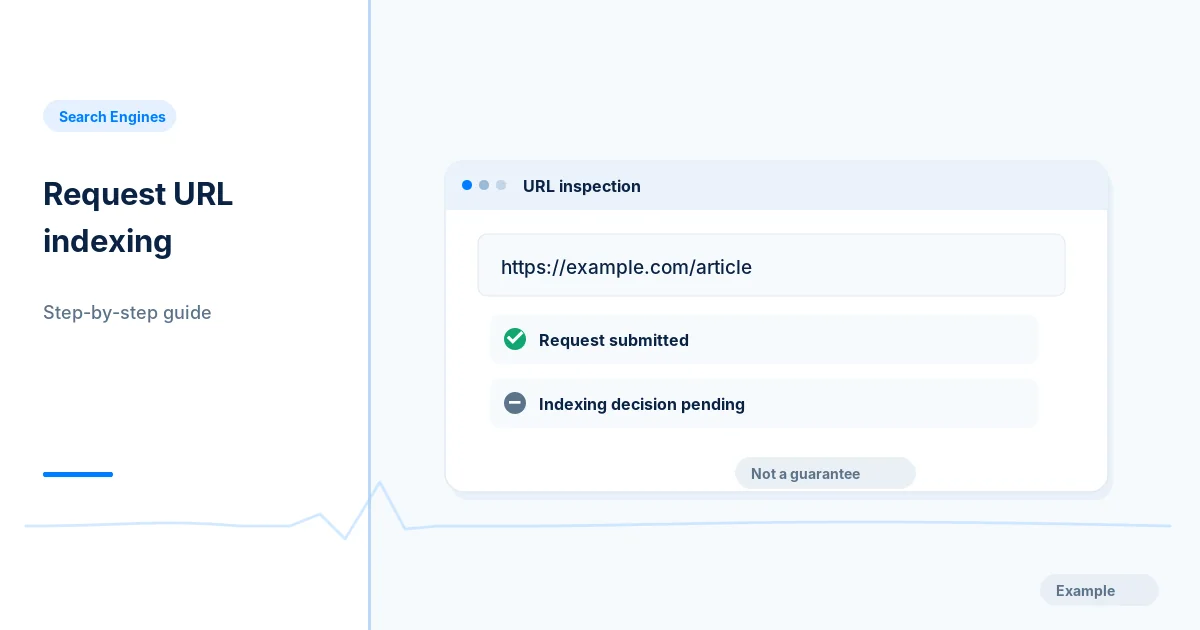
Use URL Inspection and Request Indexing for a new or fixed page, after checking eligibility, and follow up with evidence rather than repeat requests.
Search Engines · 8 min read
Fix Search Console ownership verification errors for the HTML file, meta tag, DNS record, Google Analytics and Tag Manager methods, and add a backup method.
Search Engines · 3 min read
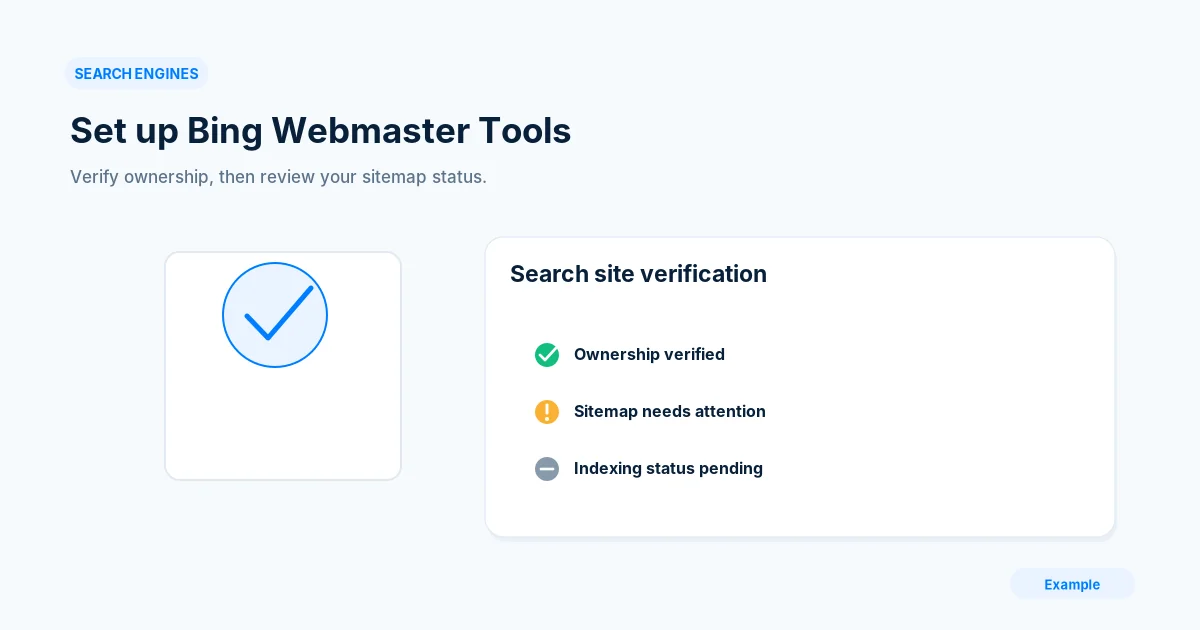
Add your site to Bing Webmaster Tools, verify ownership, submit a sitemap and set a weekly check, even if Google Search Console already works.
Search Engines · 3 min read
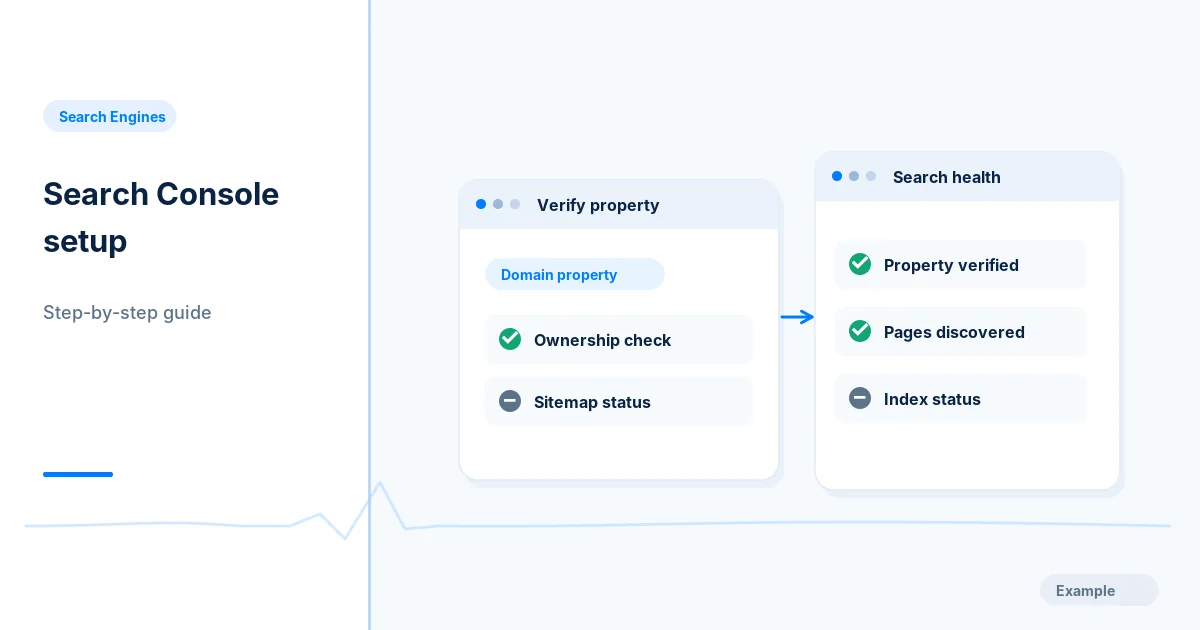
Add and verify your site in Google Search Console, inspect the home page, submit a sitemap and set up a simple routine for checking indexing reports.
Search Engines · 2 min read
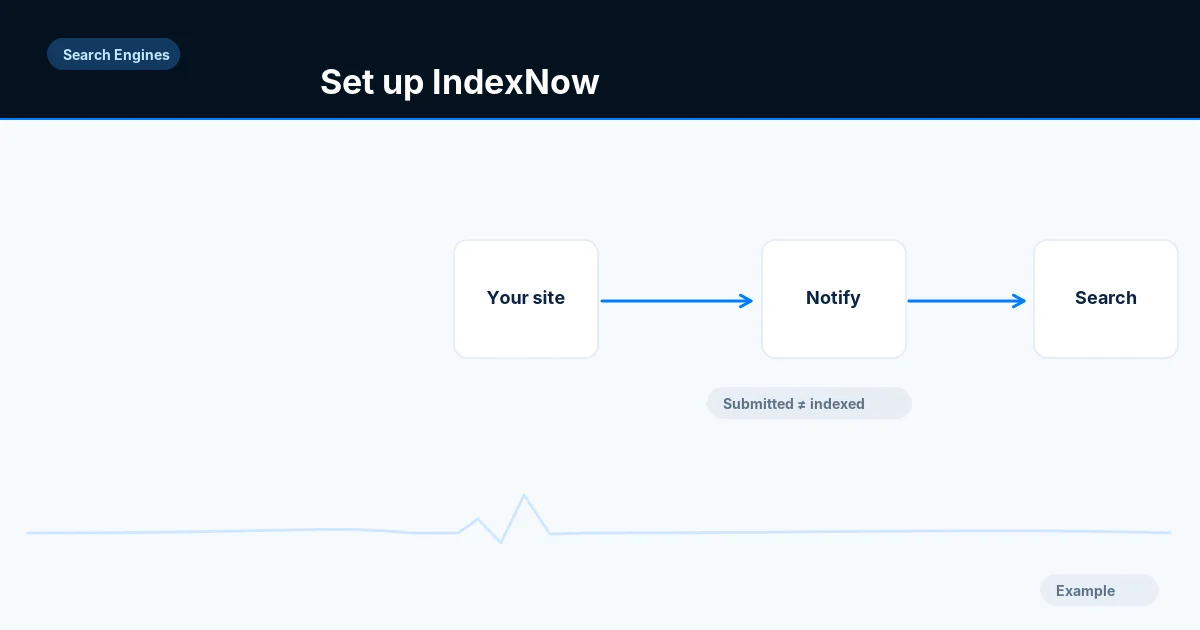
Set up IndexNow with a key file so Bing and other participating engines learn of changed URLs, and log responses without assuming indexing.
Search Engines · 8 min read
Use the Search Console URL Inspection live test and rendered HTML to check a page as Google fetches it, and learn which indexing problems it cannot detect.
 Security · 7 min read
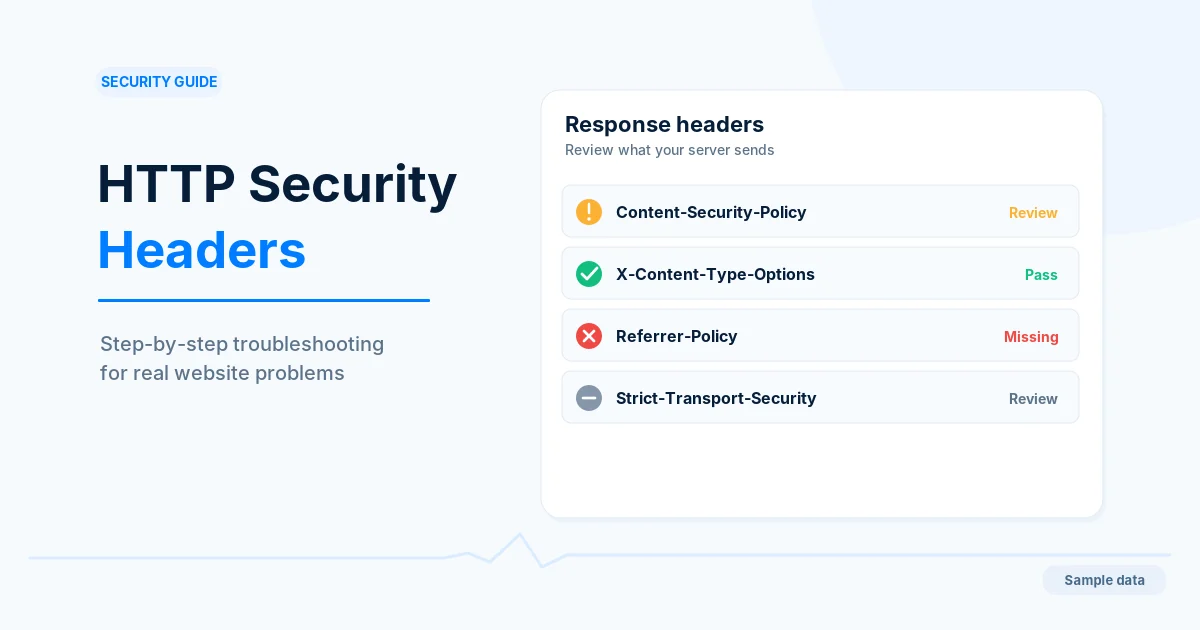
Add the common browser security headers safely: Content-Security-Policy in report-only first, nosniff, framing, Referrer-Policy and Permissions-Policy.
Security · 7 min read
Review the Cloudflare settings that affect crawling: SSL mode, bot protection, Under Attack mode, Rocket Loader and managed robots.txt.
Security · 7 min read
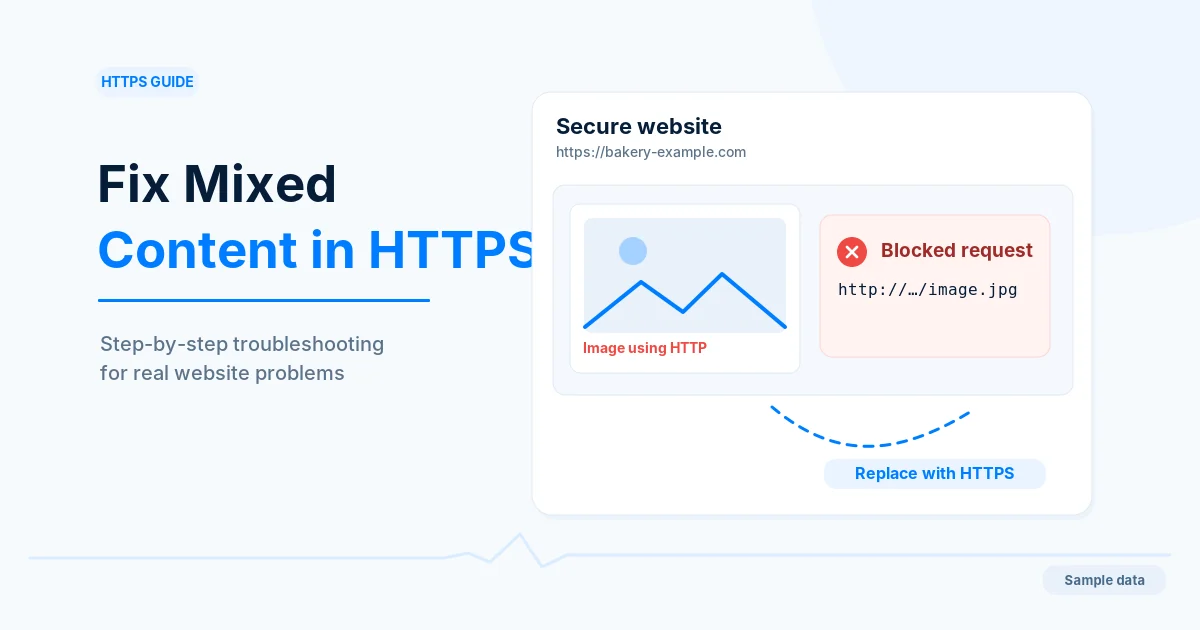
Find images, scripts and styles loaded over http:// on HTTPS pages, fix them at the source and confirm the browser warnings are gone.
Security · 10 min read
Spot injected spam pages and links on a hacked site, contain the breach, clean and harden it, then ask Google to review the fix in Search Console.
Security · 11 min read
Add the Strict-Transport-Security header in stages, from a five-minute max-age to one year, and decide whether the HSTS preload list is right for you.
Security · 9 min read
Install a certificate, fix mixed content, add canonicals and 301 redirects, update Search Console and sitemaps, then add HSTS once everything works.
Security · 8 min read
Read the Search Console security issues report, safely confirm hacked content or malware, clean the site, close the cause and request a security review.
Security · 11 min read
Find out why a browser or crawler rejects your HTTPS certificate, test expiry, hostname and chain with OpenSSL, and fix it without breaking redirects.
Security · 9 min read
Build a content security policy in report-only mode, fix what it flags, then enforce it with nonces or hashes so scripts and styles keep working.
 Sitemaps · 3 min read
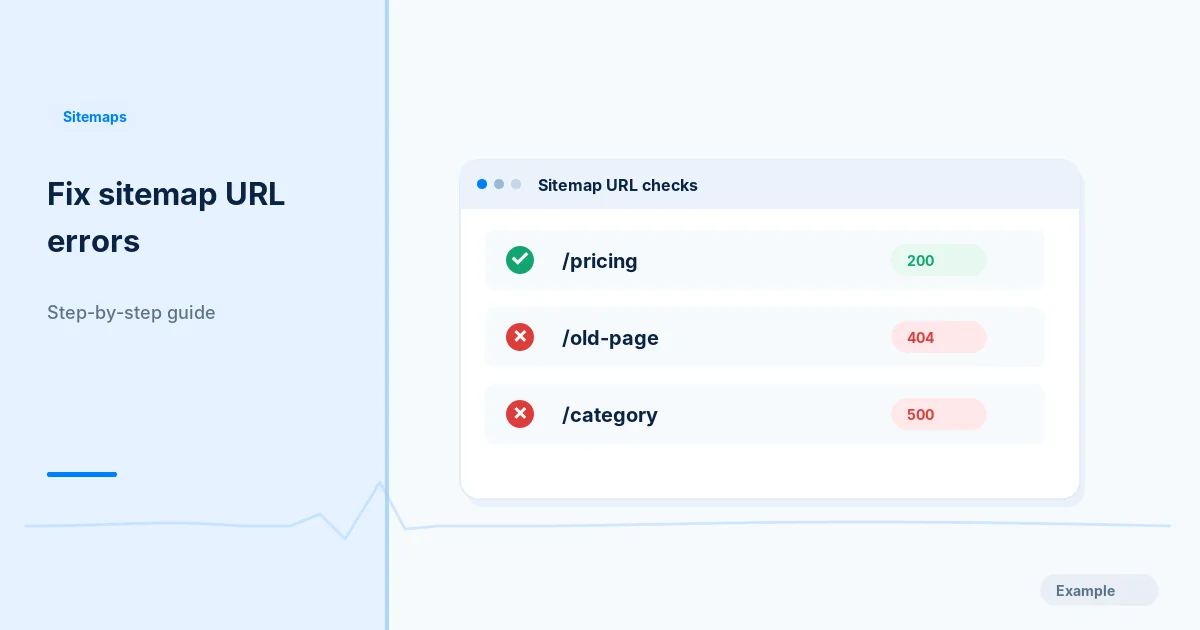
Find the URLs in your sitemap that return 404 or 500, trace the shared cause, then restore, redirect or remove them and fix how the sitemap is generated.
Sitemaps · 11 min read
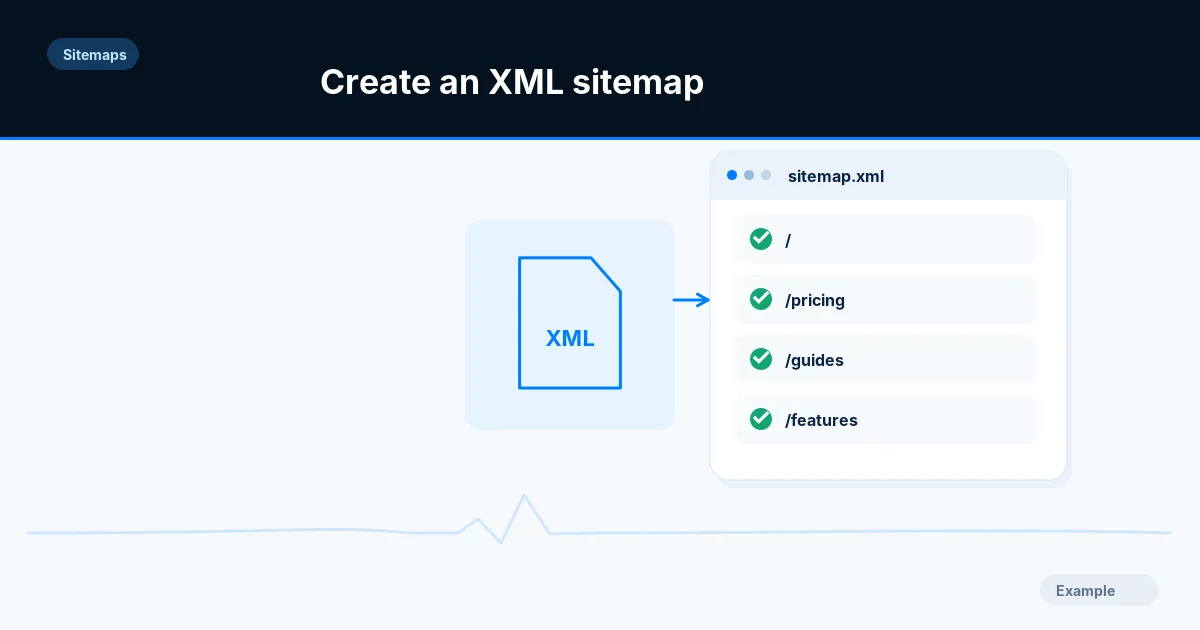
Learn how to create an XML sitemap: choose the right URLs, write valid markup, respect the 50,000 URL and 50 MB limits, then publish and submit it.
Sitemaps · 8 min read
Learn how an HTML sitemap for visitors differs from an XML sitemap for crawlers, decide which your site needs, and build and check each one.
Sitemaps · 7 min read
Decide whether your site needs image, video or news sitemap extensions, then build them with the right namespaces, required tags and size limits.
Sitemaps · 11 min read
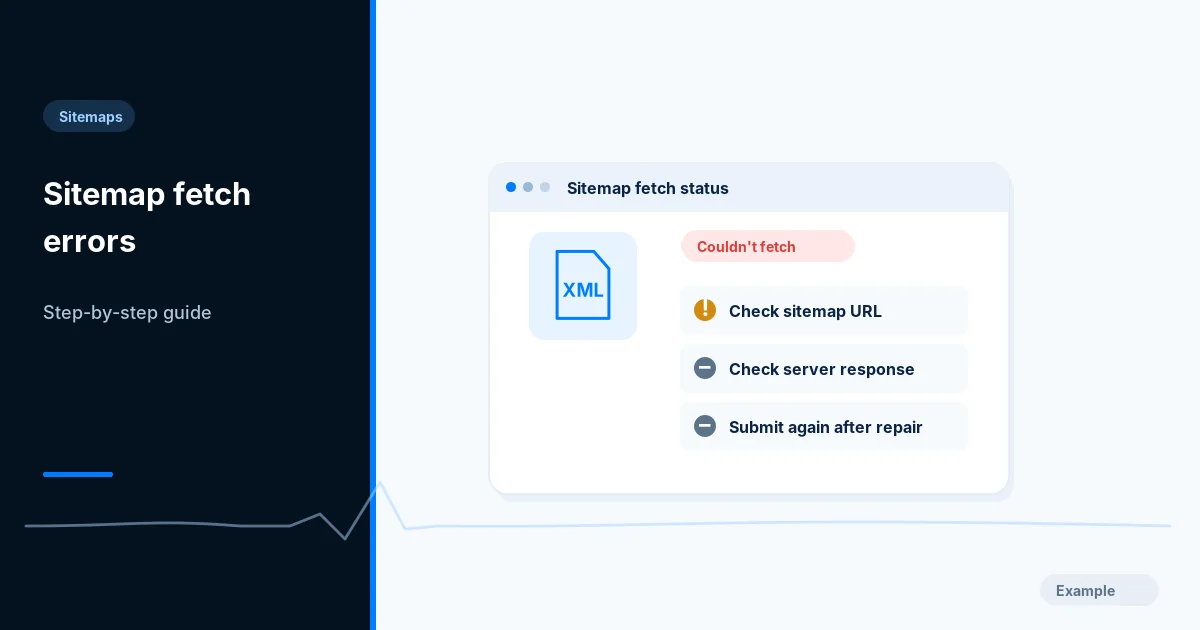
Fix the Search Console sitemap errors \"Couldn't fetch\" and \"Sitemap could not be read\" by checking status codes, redirects, XML, host and firewall rules.
Sitemaps · 8 min read
Find out which sitemap tags Google and Bing actually use, set accurate lastmod dates from real edits and drop the changefreq and priority values.
Sitemaps · 3 min read
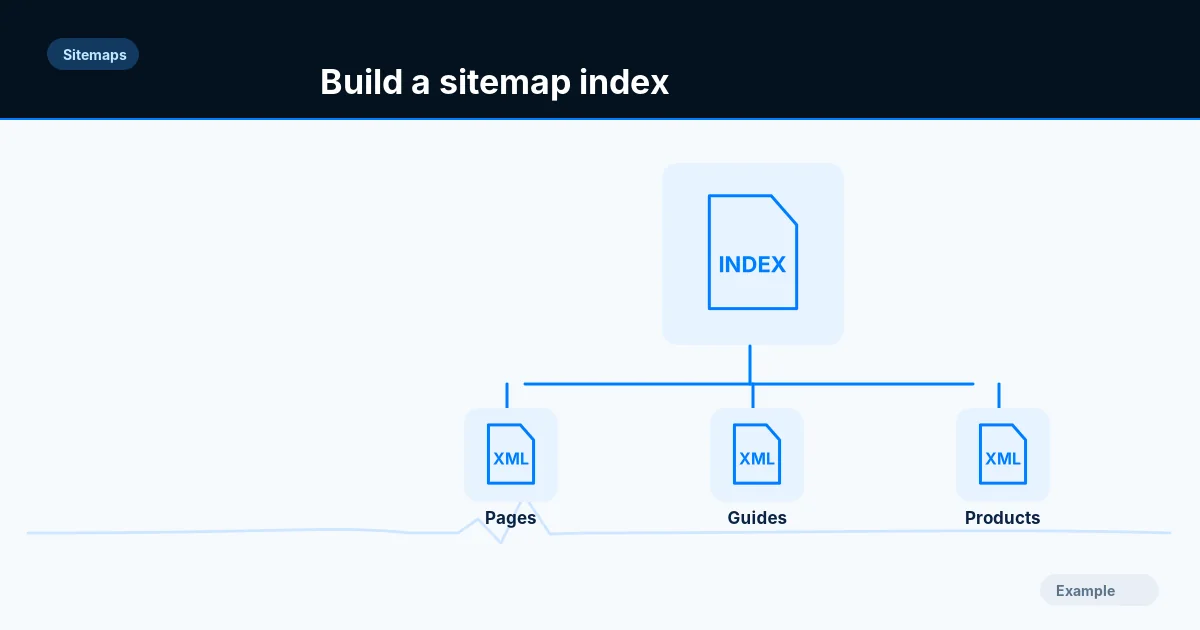
Split a sitemap that passes 50,000 URLs or 50 MB into stable child files with a sitemap index, then validate each file and submit the index.
Add Article, NewsArticle or BlogPosting JSON-LD with the right headline, author, dates and images, keep it matched to the page, and test it before launch.